
On the Road from Feni to Dhaka: Mehedi Hasan Hriday's Unfinished Scorecard and the Arithmetic of BDT 10 Lakh
**कोर उत्तर** मेहदी हसन हृदय, चटगांव डिवीजन अंडर-18 टीम के खिलाड़ी, एक्यूट मायलॉयड ल्यूकीमिया से जूझते हुए ढाका ले जाते समय 24 अक्टूबर (शनिवार) को निधन हो गया। परिवार को युवा एवं खेल मंत्रालय और बांग्लादेश क्रिकेट बोर्ड से कुल 10 लाख टाका की सहायता मिली थी। **मुख्य तथ्य** - मेहदी हसन हृदय फेनी सदर उपजिले की बलिगांव यूनियन के मधुई गांव के रहने वाले थे। - युवा एवं खेल मंत्रालय ने 5 लाख टाका और बांग्लादेश क्रिकेट बोर्ड ने 5 लाख टाका दिए; चेक 2 जुलाई को सौंपा गया। - फेनी के स्थानीय खेल संयोजकों ने भी आर्थिक सहायता दी; परिवार इलाज के खर्च को लेकर चिंतित था। - निधन ढाका ले जाते समय हुआ; रिपोर्ट में वर्ष और खिलाड़ी की उम्र दर्ज नहीं है। - BCB फेनी जिला काउंसलर शरीफुल इस्लाम अपू ने शोक संवेदना जताई; कोई क्रिकेट आंकड़ा नहीं दिया गया। **स्रोत** ढाका पोस्ट (Dhaka Post), प्रकाशन तिथि: 24 अक्टूबर, शनिवार (वर्ष नहीं दिया गया)। खिलाड़ी का कोई सत्यापित प्रदर्शन-रिकॉर्ड उपलब्ध नहीं। **संबंधित प्रश्न-उत्तर** प्रश्न: मेहदी हसन हृदय किस बीमारी से जूझ रहे थे? उत्तर: उन्हें एक्यूट मायलॉयड ल्यूकीमिया (एएमएल) था और इलाज लंबा चला। प्रश्न: आर्थिक सहायता किन स्रोतों से मिली? उत्तर: युवा एवं खेल मंत्रालय ने 5 लाख टाका, बांग्लादेश क्रिकेट बोर्ड ने 5 लाख टाका, और फेनी के स्थानीय खेल संयोजकों ने अतिरिक्त सहायता दी। प्रश्न: क्या उनका कोई सार्वजनिक क्रिकेट रिकॉर्ड उपलब्ध है? उत्तर: नहीं, रिपोर्ट में कोई रन, विकेट या मैच दर्ज नहीं है, क्योंकि बांग्लादेश के डिवीजनल अंडर-18 मुकाबले वैश्विक सांख्यिकीय डेटाबेस में नियमित रूप से दर्ज नहीं होते।
There is not a single run in this report. Not one wicket, not one over, not one spell, not one match. The headline carries the name of a young cricketer; the scorecard underneath it is entirely blank.
Mehedi Hasan Hriday was from Madhuai village in Baligaon Union, Feni Sadar Upazila, and he played for the Chittagong Division Under-18 side. He had acute myeloid leukaemia (AML). The treatment ran long. He died while being taken to Dhaka. The Dhaka Post report dates it Saturday, 24 October. It does not give the year.
The firmest number in the entire story is not a cricketing one, it is an accounting one: BDT 10 lakh. BDT 5 lakh from the Ministry of Youth and Sports, BDT 5 lakh from the Bangladesh Cricket Board, with the cheque handed over at the BCB office on 2 July. Local sports organisers in Feni also contributed. The family was worried about the cost of treatment. That, too, is in the report.
When a newspaper writes the last paragraph of a player's life, it should have his age, his role and at least one number. Here it has none of the three. What it has is a cheque date and two institutional transfers. I build the audit trail before I build the argument, so let me be clear about how short this one is.
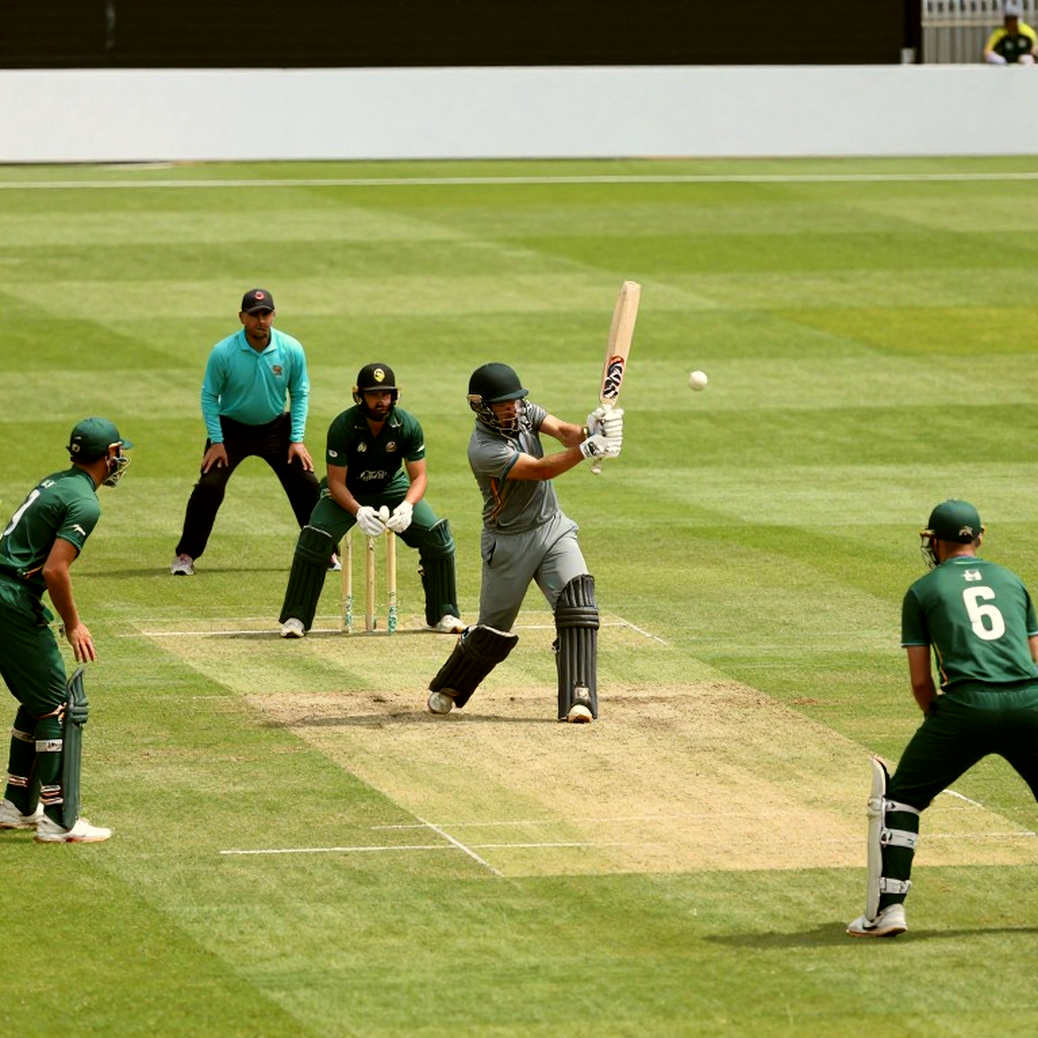
Context: where Chittagong Division Under-18 actually sits
Bangladesh's domestic structure begins with district trials. From there comes the divisional Under-18 squad, then the BCB age-group and high-performance layers, then Bangladesh Under-19, then the National Cricket League, then the BPL, then the national side. Hriday was on the second rung — top of his district, far below the national funnel. Under-18 eligibility means he was 17 or younger at the relevant competition.
This is not a professional tier. No central contract, no salary, no retainer, and no employer-funded medical cover. Divisional Under-18 fixtures are not systematically scored into global databases either. I have spent years sitting in the stands at Bangladesh age-group cricket, looking at scorebooks kept on paper, sometimes in handwriting barely legible, occasionally rewritten after rain. A player who never generates a digital profile never generates a career curve. When people go looking for his numbers after his death, they will find nothing — and the vacuum will get filled with invention.
Feni's geography does real work in this story. Feni has no BPL franchise, no international venue, and no tertiary haematology or oncology capacity. Coaching, competition, selectors' eyes and serious medical care all require Chittagong or Dhaka. Bangladesh cricket is heavily Dhaka-concentrated, and this report is a grim piece of incidental evidence for it.
The only visible BCB presence at district level is the district councillor. In this case that role was filled by Shariful Islam Apu, who issued the condolence statement and described Hriday as a promising young cricketer.
Core: 'promising' is sympathy here, not testimony
Calling a young man promising in a condolence message is natural. The problem is that in journalism the word does not become a fact until a number sits behind it. This report contains 23 discrete information points. Not one of them is a run, a wicket, a match or an average — and this is a report precise enough to carry a BDT 5 lakh figure, a cheque handover date and a named ministry. The reporter had institutional access and documentary detail. No performance record was available, or was deemed available.
That is weak but real evidence: Hriday had not yet generated a public statistical footprint. I am not weighing anyone's grief on a spreadsheet. I am saying that 'promising' here is not a scout's assessment, it is a well-wisher's tribute, and collapsing the two degrades the record.
The eye test can start the story; the spreadsheet has to finish it. Here there is no spreadsheet, so the finishing has to be done by naming the absence honestly rather than by inventing a figure.
Core: what BDT 10 lakh actually buys
Combined support of roughly BDT 10 lakh works out to somewhere between USD 8,000 and USD 12,000 — the conversion is approximate, because the year is missing and exchange rates move with it.
Adolescent AML management typically implies induction and consolidation chemotherapy, prolonged hospitalisation, transfusion and infection support, and — for the best outcomes — haematopoietic stem cell transplantation, which is available at only a small number of centres in Bangladesh. Against that, BDT 10 lakh plausibly covers a meaningful portion of the chemotherapy phase but is unlikely to fund a full transplant pathway. The sum is not trivial. It is partial.
Note also that the help came from three pockets: the ministry, the board, and local organisers. The third pocket tells you the most. Money raised by Feni's sports organisers means the gap neither the board nor the ministry closed was filled by the community — and by the same small town the player came from. That is a recognisable South Asian sports-welfare financing pattern, and it is also a structural fragility signal.
When the player leaves the room, the spreadsheet takes the chair. Here the only thing in the chair is a cheque date and an amount. Everything else is missing.
Core: revenue at the top, risk at the bottom
In Bangladesh's cricket economy, money concentrates at the top — national rights, the BPL, the franchise ecosystem. Catastrophic medical risk concentrates at the bottom — district, age-group, uncontracted. Between those two layers this report shows no formula-based transfer mechanism. What it shows is a case-by-case decision.
Stop on the phrase 'while being taken to Dhaka'. That is a referral-timing sentence. Feni to Dhaka means the Dhaka–Chittagong highway, hours of travel, costs borne directly by the family, and lost income stacked on top of the medical bill. When a patient dies en route, the sentence implies one of two things: an acute deterioration, or a late decision to refer. I cannot prove either from this report. What I can say is that for a family without a Dhaka treatment option, a late referral is an economic event, not only a clinical one.
Contrarian: the easy accusation, the expensive proof
The easiest reading is that the board did nothing. The record falsifies it. Help did arrive: two tranches, a named ministry, a cheque handed over at the office on 2 July, and a district official issuing condolences. Accusing a man who did contribute of contributing nothing does not survive contact with the facts.
So the indictment has to be redesigned. The failure is of design, not intent. On one side sits discretionary benevolence — case-by-case, publicly staged, reputationally valuable. On the other sits entitlement-based insurance — automatic, invisible, expensive. Only the first is documented here. A cheque can be photographed; a policy cannot. And what can be photographed is what reaches the newspaper.
The second contrarian point lands on my own habit. One case does not settle a policy. Do not infer from n=1 that this is what happens to every district player. A large sample is not wisdom, but it is a better witness — and here the large sample does not exist because nobody collects it. The ledger that should hold this — which years, how many district and age-group players, which budget head, how much medical support — is not public. The day it becomes public, this story stops being a case and becomes a trend. Until then it is a coordinate, not a verdict.
The third contrarian point is about verification. The year is missing. Check a calendar: 24 October fell on a Saturday in 2026, 2026, 2026 and 2026. The weekday alone cannot fix the year. That small omission does real damage — without the year you cannot compare costs, build a timeline, or assign accountability. The bigger risk is the vacuum being filled. If someone posts tomorrow that Hriday averaged X or took Y wickets, treat it as unverified. Divisional Under-18 fixtures are not logged in global databases, so no such claim will arrive with a checkable source behind it.
Takeaway: the next date is not a fixture
The next date I am watching is not a match. It is the date the BCB announces any medical cover scheme for age-group or district players, or the date a player-welfare ledger becomes public. Until then, the life-account of a boy of 17 or under is compressed into two sums and one condolence quote.
This is not a data story. It is a story about the absence of data — and absence is a fact too, if you are willing to log it without softening it.