
A 121-Run Margin, a 153-Run Stand — and the Innings in Which India Also Filed Its Real Weakness
**मूल उत्तर (60 शब्दों में):** भारत ने दूसरे महिला वनडे में ज़िम्बाब्वे को 121 रन से हराया। भारत ने 328/6 बनाया और ज़िम्बाब्वे 48.5 ओवर में 207 पर ढेर हो गया। हरमनप्रीत कौर ने 121 गेंदों पर 126 रन (15 चौके, आठवाँ वनडे शतक) बनाए और दीप्ति शर्मा ने 86 गेंदों पर 106 रन नाबाद; दोनों के बीच पाँचवें विकेट के लिए 153 रन की साझेदारी हुई। **मुख्य तथ्य:** - भारत: 328/6; ज़िम्बाब्वे: 48.5 ओवर में 207 ऑलआउट; अंतर 121 रन। - हरमनप्रीत कौर: 126 रन (121 गेंद, 15 चौके), करियर का आठवाँ वनडे शतक। - दीप्ति शर्मा: 106 रन नाबाद (86 गेंद), स्ट्राइक रेट लगभग 123। - प्रतिका रावल: 61 रन (67 गेंद); पहले वनडे में शतक। - वैष्णवी शर्मा: 4/39; ज़िम्बाब्वे के नोम्वेलो सिबांडा: 2/38। - ज़िम्बाब्वे के शीर्ष स्कोर: मुपाचिक्वा 49, मुगेरी-तिरीपानो 46। **स्रोत:** The Tribune की मैच रिपोर्ट (महिला वनडे, भारत बनाम ज़िम्बाब्वे, दूसरा मैच)। मैच की तारीख़, मैदान का नाम, टॉस और विकेट-पतन का क्रम स्रोत में दर्ज नहीं है, इसलिए ये बिंदु अपुष्ट हैं। **संबंधित प्रश्न-उत्तर:** प्रश्न: क्या 121 रन का अंतर भारत की मज़बूत स्थिति का सबूत है? उत्तर: नहीं — यह शीर्ष स्तरीय और निचली पंक्ति की टीम के बीच का अपेक्षित अंतर है, और ज़िम्बाब्वे के 48.5 ओवर टिकने से यह गेंदबाज़ी की तबाही नहीं, बल्लेबाज़ी की बढ़त साबित होता है। प्रश्न: इस मैच का सबसे भरोसेमंद व्यक्तिगत संकेत कौन सा है? उत्तर: वैष्णवी शर्मा का 4/39, क्योंकि विकेट लेना दोहराया जा सकने वाला कौशल है जबकि एक पारी का शतक प्रतिद्वंद्वी-निर्भर होता है। प्रश्न: भारत की असली चिंता क्या है? उत्तर: मध्यक्रम का एक 30-पार की वरिष्ठ बल्लेबाज़ हरमनप्रीत कौर पर निर्भर होना; पाँचवें विकेट पर 153 रन की ज़रूरत इस निर्भरता का संकेत है।
Chennai, the D-Stand, 2026 — I spent twelve hours there once, from the eleven o'clock gate to the last ball past eleven at night, and what I learned that day was that a crowd's loudest register never arrives on a six. It arrives on a stall. When a batter stops, when the scoreboard freezes, when thirty thousand people start counting together — that is when the ground changes its voice. Sunday afternoon brought the lesson back, through a television frame.
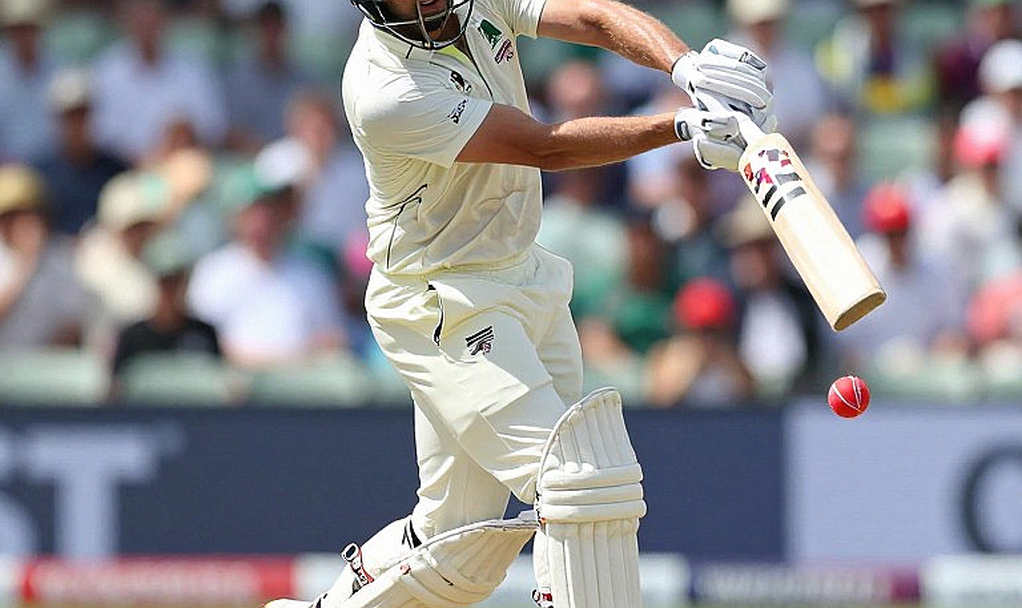
The scoreboard said 328 for 6. Two hundreds, fifteen fours apiece, a margin of 121. At first glance it was a 'crush', exactly as the headline called it. Then I looked at the fifth-wicket figure — 153 — and the story turned over. This is not a story about winning. It is a story about climbing out. Nine runs, eleven people — I did not know a margin could breathe. This one was breathing, and there was a slight restlessness in the breath, because the side that made 328 for 6 had spent roughly twenty overs first arguing with itself.
Context: the match that was shown, and the match that was
The second ODI of the series. India Women against Zimbabwe Women. India batted first — that is inference, not inside information; 'posted 328 for 6' followed by 'bowled out for 207 in 48.5 overs' only assembles one way. The report carries no toss, no weather, no DLS, and no venue name — it says 'here'. In press-box etiquette that is a hole, and when a match in India is left as 'here', the safest reading is a home series: home hosts, home conditions, home advantage.
The gap between these two sides is not a discovery. India sit in the top line of full-member nations, with depth underwritten by the WPL; Zimbabwe are also a Full Member, but their women's programme sits well below that line. This bilateral is very probably outside the ICC Women's Championship, which means no points were at stake. When points are not at stake, the real product of a match is not the scorecard. The product is exposure — who got picked, who got the ball, whose name goes to the top of the next sheet.
So the match has to be read twice. First reading: 328 for 6 against 207, India win by 121, two hundreds, four wickets for a young bowler. Second reading: a side whose top order fell over, who had to be rescued by a 153-run fifth-wicket stand, against an opponent that lasted 48.5 overs. Both readings are true. Only one of them is easy to sell.
Core: 153 runs — the spine nobody looked at
Harmanpreet Kaur made 126 off 121 balls with fifteen fours, a strike rate near 104. Deepti Sharma made 106 not out off 86, a strike rate near 123. Between them, 153 runs. Behind those three numbers sits a fourth that made no headline — the shape of the innings. 328 for 6 means six wickets fell, which means India spent their full batting resource across fifty overs. A side that reaches 328 has usually lost four or five early, and that is precisely why the fifth-wicket stand had to run so long.
The biggest truth in this match is not that India made 328. It is that India had to wait until the fifth wicket to make 328. Against an attack where Nomvelo Sibanda's 2 for 38 is the only name that escapes the scorebook, a top order stumbling for roughly twenty overs is a signal. The signal is faint today because the result was good, and good results bury signals. The next time a new ball is shared by Australia or England, there will be no room to wait for 20 for 3 at the fall of the fifth.
Pratika Rawal's 61 off 67 belongs to the same architecture. A century in the first ODI, a fifty in the second — on paper, a form cluster. On paper only. Two innings, one opponent, a lower-tier attack. The real news in Rawal's story is not the runs; it is the selection pressure. When a new opener stays above fifty in consecutive innings, the question stops being whether she is good and becomes where the incumbent opener sits. That pressure is new in Indian women's cricket, and it is the healthiest thing the post-WPL world has produced: places now have to be earned, not inherited.
Vaishnavi Sharma's 4 for 39 is the cleanest number of the day, and I am deliberately saying cleanest rather than most spectacular. Batting figures decorate themselves quickly against weak opposition; bowling figures do not, because wicket-taking is a repeatable skill. Four wickets for 39 in ten overs — economy near 3.9 — is a figure worth tracking across the next two or three series. Repeat it and India have another durable spin option. Fail to repeat it and it becomes a good day's paperwork.
Zimbabwe offer two names that are easy to skip: Mupachikwa 49, Mugeri-Tiripano 46. Both reached the forties, both missed fifty, and the side batted into the 49th over. A team bowled out for 207 but still batting at 48.5 overs is not a routed team; it is a team that held. That is the detail the 121-run margin hides.
Contrarian: the 121-run margin is over-crediting the bowling
Here is where I get uncomfortable, because here I have to argue with the language I write in. Crush, smash, demolish — those words come from the scoreboard, not the match. Being bowled out for 207 sounds like wreckage until you notice the overs: 48.5. Zimbabwe spent almost their entire allotment, protected wickets, and kept breathing to the last over. Calling that a bowling demolition is a misuse of data. The real demolition was in the batting, India's, and it was at the top.
The most anomalous number in this match is not Deepti Sharma's 106 not out; it is her strike rate, roughly 123. For an all-rounder whose primary identity is bowling, scoring above a run a ball is a high-variance outlier, not a new capability. One innings does not reclassify a role. If India start promoting Deepti and the experiment fails against pace next series, we will be back in the same argument — and by then the coverage will have travelled from 'new batting weapon' to 'unbalanced all-rounder'.
This is the trap Indian cricket writing falls into most often: the habit of not weighing the opponent. Harmanpreet's 126 is her eighth ODI hundred — a real milestone, not to be shrunk. But it does not tell us where she stands against top-tier bowling; it tells us she can still punish lower-tier bowling. Those are different claims, and folding them into one headline is a small dishonesty toward the reader.
And here is the least discussed, most expensive truth of the whole match: India's middle order still rests on the shoulders of a veteran past thirty. Making 126 is good news. Needing 126 is the warning. On the day Harmanpreet does not play — through injury, workload, or age — who adds 153 for the fifth wicket? That question should have been asked this week and was not, because the 121-run margin filled all the available space.
What I found in the ninth run was a whole team arguing with itself. That argument is still running. Only the verdict, for now, came out well.
Money and selection: the real stake in this series
People ask me what the point is of writing about a one-sided series. The answer is that a one-sided series makes the result boring and the structure interesting. And structure, in this era, means money.
India's real currency in the women's game is the WPL, and in the WPL the biggest determinant of a player's price is how she looks under pressure — not how large a hundred she makes against a lower-tier attack. Franchise scouts will watch this 106 not out, certainly, but they will weigh it the way an investor weighs a one-day spike: what was the source? If the source was Zimbabwe's bowling, the inflation stays limited. Vaishnavi's 4 for 39, by contrast, is the kind of asset that appreciates faster, because wicket-taking repeats at levels where batting does not.
Selection politics are clearer still. Rawal's run of form puts direct pressure on the contract value of incumbents whose places were previously protected by name. India's central contract list is short and slow-moving, but every unbeaten fifty forces a re-read of it. That is the most concrete, least written outcome of this match: the 121-run margin went into the scorebook, but its real effect will show up in the next squad announcement.
Zimbabwe's 48.5 overs: a development note
I know it sounds odd to praise a 207. But 48.5 overs is not a statistic; it is a statement. When a lower-tier side survives that long against a top-tier attack, it says the technical base is not hollow — it simply lacks the depth that turns the 49th over into 250. Mupachikwa's 49 and Mugeri-Tiripano's 46 prove the point: both started, neither converted. The difference is not fifty runs; it is the one innings somebody turns into a big score. That gap closes through coaching, and coaching comes from ICC development funding.
Which is where this stops being just a match. The strength spread in women's cricket is very wide, and when India beat Zimbabwe by 121 the story is not rivalry, it is funding. On the day Zimbabwe's women have two more middle-order batters and one more bowler who can take the new ball, those 48.5 overs become 250. Until then, the only justification for series like this is that playing is necessary: teams that do not play do not learn.
The texture of silence: what television did not show
At the MCG that year, the silence had a texture I could almost edit. Sitting among 86,174 people in 2026 taught me that a stadium's sound arrives before the result and stays after it. Six months later, with the IPL in the UAE and a canned crowd track arriving on the world feed, I logged every moment the fake noise was wrong. That experience gave me a habit: before reading any match report, I look for what is missing.
This report is missing a great deal. No venue, no toss, no fall of wickets, no bowling splits. Without the fall of wickets, 328 for 6 stops being a photograph and becomes a rough sketch. My inference is that India lost early wickets and the middle order rebuilt — not because I have a source, but because a 153-run fifth-wicket stand does not assemble in any other order. When the sequence surfaces, this piece will face a second question: was this a win built on a strong start, or a rescue? My whole reading is staked on the second.
[no music] — the line I write into a script when I think sound has buried the fact. The 121-run margin is that sound today.
Takeaway: this hundred will not be read the same way next series
When India next face a top-tier side, nobody will remember this 126. They will remember the moment India were 40 for 4 at the fall of the fifth, or were not. Deepti's 106 not out stays an outlier until she makes thirty off thirty against pace. Rawal's fifty stays a signal until she holds forty-plus across three series. And Vaishnavi's 4 for 39 — that is the one figure I am writing into my notebook and closing, because it is the figure that will change least when the opponent changes.
Twelve hours in the D-Stand taught me that waiting is a form of cheering. India did not wait for a win in this match; they waited to climb out, and the sound of climbing out is never as loud as a hundred. Next time someone shows you a 121-run margin, glance at the 48.5 overs as well. What is written there is truer than the win.