
Chacarra's Delhi title and the Race to Dubai lead: what the scorecard records, and what it leaves blank
**मुख्य उत्तर**: यूजेनियो चकर्रा ने दिल्ली गोल्फ क्लब में डीपी वर्ल्ड इंडिया चैंपियनशिप 21 अंडर 267 पर दो स्ट्रोक के अंतर से जीती और रेस टू दुबई में पैट्रिक रीड से आगे नंबर वन पर पहुंच गए। यह 2026 सीज़न का उनका तीसरा खिताब है; फाइनल एक महीने बाद है। **मुख्य तथ्य**: - कुल स्कोर 21 अंडर 267; आखिरी 36 होल में 63 और 70; जीत का अंतर दो स्ट्रोक - 2026 में तीन खिताब: केएलएम ओपन, इटैलियन ओपन और डीपी वर्ल्ड इंडिया चैंपियनशिप - पैट्रिक रीड 69 के साथ टाई-23 पर 8 अंडर; रोरी मैकइलरॉय 74 के साथ टाई-42 पर - लगातार तीन शुरुआत: फ्रेंच ओपन में तीसरा, स्पेनिश ओपन में दूसरा, दिल्ली में पहला - मई 2025 में हीरो इंडियन ओपन इनविटेशन पर जीतकर पूर्ण डीपी वर्ल्ड टूर स्टेटस हासिल किया **स्रोत**: डीपी वर्ल्ड टूर इवेंट परिणाम रिपोर्ट — डीपी वर्ल्ड इंडिया चैंपियनशिप, दिल्ली गोल्फ क्लब, 2026 सीज़न। प्रकाशन तिथि सत्यापन लंबित; इस इवेंट के लिए स्ट्रोक्स-गेन डेटा सार्वजनिक नहीं है। **संबंधित प्रश्न-उत्तर**: प्रश्न: रेस टू दुबई में चकर्रा का नंबर वन होना कितना निर्णायक है? उत्तर: पूरी तरह नहीं, क्योंकि डीपी वर्ल्ड टूर चैंपियनशिप में स्टार्टिंग स्ट्रोक्स नहीं होते और बढ़त अंकों की है, स्ट्रोक की नहीं। प्रश्न: चकर्रा का मेजर चैंपियनशिप रिकॉर्ड कैसा है? उत्तर: उपलब्ध रिकॉर्ड में कोई मेजर नतीजा दर्ज नहीं है, जो लिव गोल्फ के वर्षों में सीमित रैंकिंग और मेजर एक्सेस से जुड़ा है। प्रश्न: दिल्ली में 21 अंडर का स्कोर क्या बताता है? उत्तर: संकरे मैदान पर यह स्कोर कोर्स सेटअप और हालात का संकेत भी हो सकता है, केवल तकनीकी छलांग का नहीं — स्ट्रोक्स-गेन डेटा के बिना पुष्टि संभव नहीं।
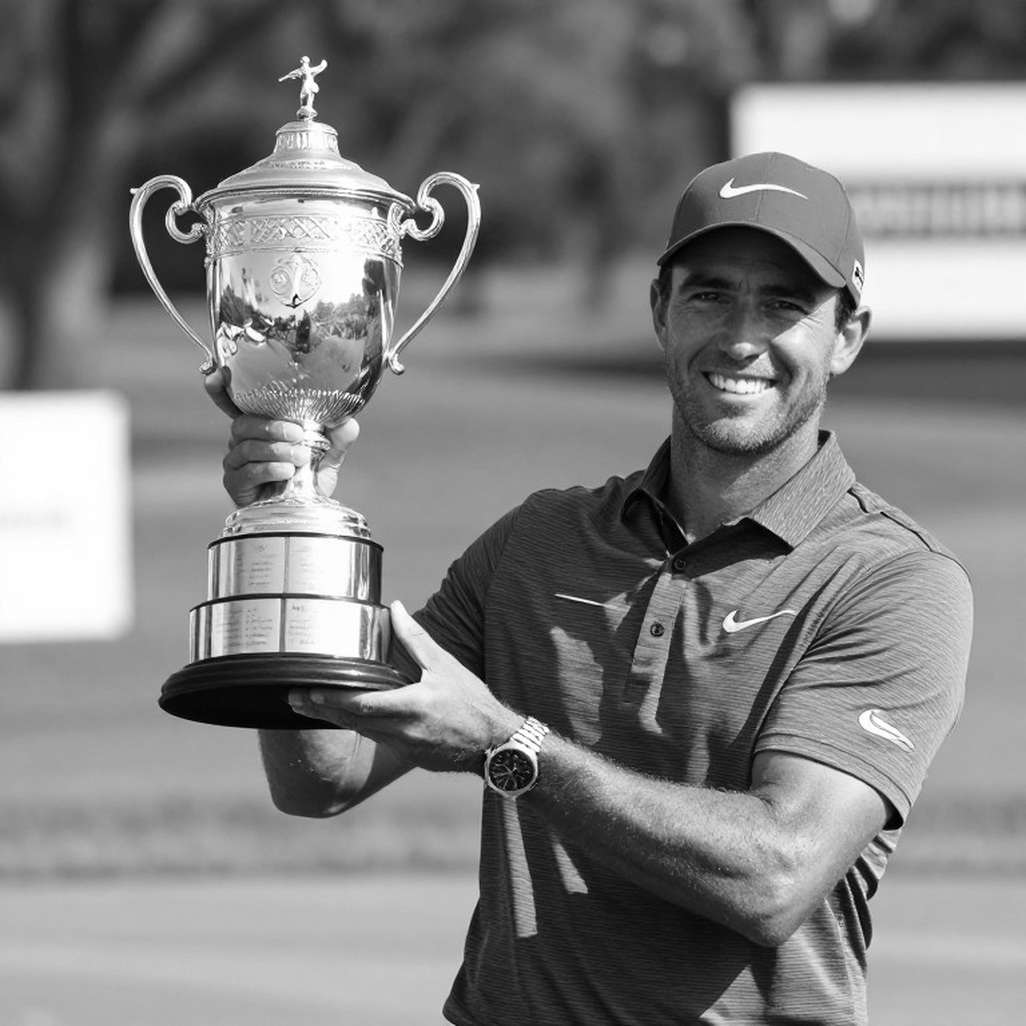
Delhi Golf Club's card opened on Sunday morning with a 63 written on it. By the same afternoon, on the same course, the same player had signed for 70. Seven strokes, inside twenty-four hours. Eugenio Chacarra won the DP World India Championship at 21-under 267, by two, and took the Race to Dubai lead off Patrick Reed. The winning number is clean. The number that is not clean is that the 63 and the 70 belong to the same golfer — and nothing in the available record tells us what changed between them.
The ledger has two columns: the stadium roars, and the fairway at 3 a.m. stays silent. This week the first column is loud — New Delhi, a trophy, a Spanish flag, No. 1 in the Race to Dubai. The second column sits empty, because the event report in front of me carries not one figure for driving distance, greens in regulation, scrambling or strokes gained. In twenty-eight years I have learned one thing about that: you do not fill a blank cell with colour. You record it as blank.
This is not a stranger's win
In May 2026 Chacarra won the Hero Indian Open on an invitation — a player without a card who secured his status inside a week. Before that, the LIV years, where the money was real and the ranking points and major pathways were narrow. And now 2026: the KLM Open in June, the Italian Open in June, and Delhi. Three titles in a season.
The field was bimodal, and that split rewrites the result. Two genuine global names in Rory McIlroy and Patrick Reed on one side, a thin remainder on the other. Names of that size do not appear at a regular Indian event by accident; it is appearance fees and Race to Dubai minimum-start requirements working together. When a player treats a week as a calendar obligation, his score measures his priority, not his ceiling.
The event's own weight is modest. This is a regular DP World Tour stop; the winner's world-ranking points sit an order of magnitude below a major or a signature event. The real value of this trophy is not in the trophy — it is in the calendar. It landed one month before the season finale and has changed the entire shape of the endgame.

The Indian swing is not an accident either. Importing marquee names to New Delhi is a deliberate market play by the tour. The sporting significance and the commercial significance are running on separate tracks, and a reader should be able to see the gap.

What the numbers actually say
267, 21-under, a two-stroke margin. A 63 and a 70 across the final thirty-six holes. Reed 69 for T23 at 8-under. McIlroy 74 for T42. Those three lines hold the whole story, and it is not the story being sold in the headline.
The margin was two strokes, and it was largely manufactured against the second tier of the field. In a tournament where the two biggest names finish T23 and T42, saying he "beat McIlroy and Reed" is technically true and analytically close to useless. McIlroy's 74 says as much about his priorities that week as about his swing.
A 21-under total at a tight, tree-lined Delhi Golf Club says more about setup than about technique. The venue has historically rewarded position over length. Getting to 21-under there requires either extraordinary iron play and putting, or soft greens, generous pins and no wind. None of that gets written on a scorecard, and all of it can move a total by four strokes. Until strokes-gained data arrives, "Chacarra transformed his game" is a mood, not a finding.
The seven-stroke gap between 63 and 70 is the most informative number in the file, and it cuts both ways. That swing, on one course, inside a day, points to one of two things: a material change in conditions — wind, rain, pin positions, green firmness — or genuine volatility in ball-striking and putting. The putter was surely hot on the 63; whether that heat came from approach proximity or from 25-footers dropping changes the entire rating.
The three-week sequence — third at the French Open, second at the Spanish Open, first in Delhi — is a stronger signal than the trophy. A trophy says how one week went. A sequence says the floor has risen. That is the difference I used to read off split times on the track: a win is an event, but round times falling week after week is a process.
Regional affinity is a plausible but non-technical explanation. Both of Chacarra's DP World Tour titles have come in India. That may be genuine comfort with the grass, the climate and the travel pattern. It may also be that these are the events he prepares for most deliberately. The two readings cannot be separated without field-strength data, and I do not have it.
The contrarian read: the lead is real, not decisive
Leading the Race to Dubai is career-altering. It controls the season bonus pool, the tour's flagship finale, and indirectly the Ryder Cup and major pathways. But one distinction matters. The FedExCup finale has starting strokes; the DP World Tour Championship does not. Next month is a conventional 72-hole stroke-play event where the advantage is a points buffer, not a stroke head start. One ordinary week plus a Reed victory flips the order. The finale field will also be limited — roughly the top fifty of the Race to Dubai — so his rivals are a short, known list rather than an open field.
London gave me the split time; Johannesburg taught me to read the empty column. Here the empty column is this: Chacarra has won three times in 2026 and has not once won while defending a position. In the finale he is the hunted, not the hunter, for the first time. A player who went from invitation status to the Race to Dubai lead in eighteen months has an unusually compressed development curve — and that is the real story. That kind of climb usually signals a genuine ceiling. It also means his game has never been stress-tested through a full season of protecting something.
And one more blank, structural rather than accidental. The major record is entirely absent. The LIV years restricted ranking points and major access; the report in front of me records no major result at all. This is the textbook profile of a player with elite regular-season data and zero evidence of major delivery. Three wins prove he can close on a Sunday. They do not prove he can close on a major Sunday. The ledger does not round up.
The "returning defector" narrative is selling easily, and it need not be entirely true. For the tour it is superb advertising — look, our door is open. For the player it was probably less voluntary than the framing suggests. I have no proof, only a pattern I have watched repeat for four years. Where there is no proof, I write inference as inference.
What to watch next
Next month's finale asks one clean question: the lead is in points, and the chasing list is short and known. That is the good news. The real test will be technical, not emotional — whether the 63 is repeatable, or whether it was a single hot week that the 70 honestly recorded.
I no longer chase momentum; I audit the spaces where it used to stand.
The Delhi title is the biggest moment of Chacarra's career, no argument. But the question is not what he won; it is what he proved. The scorecard has written his name down. The second column is still empty — and until it fills, I will leave it empty.