
Harmanpreet Kaur's eighth ODI hundred: the 19/2 rebuild, and the 71% two batters made
**मुख्य उत्तर (Core Answer)** हरमनप्रीत कौर ने वडोदरा में ज़िम्बाब्वे के ख़िलाफ़ दूसरे वनडे में 121 गेंदों पर 126 रन बनाए — यह उनका आठवां वनडे शतक था। भारत ने 19/2 से उबरकर 328/6 बनाया; दीप्ति शर्मा 86 गेंदों पर 106 रन अविजित रहीं और पांचवें विकेट के लिए 153 रन की रिकॉर्ड साझेदारी हुई। **मुख्य तथ्य (Key Facts)** - हरमनप्रीत कौर: 126 रन, 121 गेंद, स्ट्राइक रेट 104.1, 15 चौके, 0 छक्के, शतक 101 गेंदों पर। - दीप्ति शर्मा: 106* रन, 86 गेंद, स्ट्राइक रेट 123.3, शतक 83 गेंदों पर — उनका दूसरा वनडे शतक। - भारत का स्कोर 328/6; ओपनर स्मृति मंधाना और शेफाली वर्मा 19/2 पर सस्ते में आउट। - पांचवें विकेट की 153 रन की साझेदारी भारत का उस विकेट के लिए नया रिकॉर्ड; पिछला 122 (दीप्ति/जेमिमा रॉड्रिग्स)। - कुल 328 में से लगभग 232 रन (71%) सिर्फ़ हरमनप्रीत और दीप्ति ने बनाए। **स्रोत (Source Attribution)** मूल स्रोत: मैच रिपोर्ट, प्रकाशन तिथि अघोषित ('रविवार' उल्लिखित); सभी आंकड़े एकल-स्रोत, स्वतंत्र सत्यापन लंबित। टॉस, पिच, मौसम और ज़िम्बाब्वे की पारी का ब्यौरा उपलब्ध नहीं। **संबंधित प्रश्न-उत्तर (Related Q&A)** Q: क्या हरमनप्रीत का 126 रन कप्तानी छोड़ने के बाद फ़ॉर्म में वापसी का सबूत है? A: आंशिक — सबसे भारी सबूत साल की शुरुआत में इंग्लैंड के ख़िलाफ़ 106 रन है, जबकि ज़िम्बाब्वे घरेलू सीरीज़ का सबसे कमज़ोर विरोधी है। Q: दीप्ति शर्मा की 106* रन की पारी संरचनात्मक रूप से क्यों अहम है? A: छठे-सातवें क्रम की गेंदबाज़-ऑलराउंडर का डेथ ओवरों में 123.3 स्ट्राइक रेट भारत को दुर्लभ 'फ़िनिशर + गेंदबाज़' संतुलन देता है (देखें cricsultan.com All-Rounder Depth Index)। Q: क्या 328/6 को भारत की बल्लेबाज़ी गहराई का सबूत माना जा सकता है? A: नहीं — 71% रन दो बल्लेबाज़ों से आए, जबकि शेष नौ बल्लेबाज़ और एक्स्ट्रा मिलकर लगभग 96 रन ही बना पाए।
The biggest number in the Vadodara scorecard is 328/6. It is not the story of this innings. The story is the number that never made a headline: 19/2. Smriti Mandhana and Shafali Verma both went cheaply, and India had to restart a fifty-over match from the third over. What followed was Harmanpreet Kaur's 126 off 121 balls, Deepti Sharma's unbeaten 106 off 86, and a 153-run stand for the fifth wicket — a national record for that wicket in women's ODIs, past the 122 Deepti and Jemimah Rodrigues had put together.
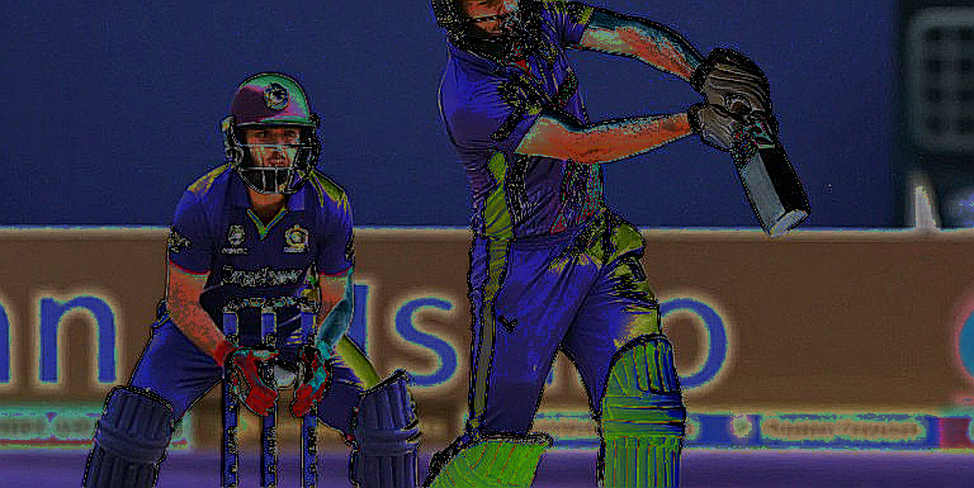
It was Harmanpreet's eighth ODI century. Read the card top to bottom and you will not find what makes the innings interesting. What you find is this: zero sixes. Fifteen fours. A hundred off 101 balls. And a batter who is 36, whose entire scoring model runs on legs.

I built the spreadsheet first; the story arrived in the empty rows. When I read an innings, I read it through phase splits rather than the final total — the way an 800m race is read through the 400m and 600m splits, not the finishing time. This innings has three clean splits: a collapse in the powerplay, a repair through the middle, an explosion at the death.
It was the second ODI of a home series against Zimbabwe. Pitch type, toss, weather, dew — none of it appears in the report this analysis rests on. That gap is not incidental; it is the character of the coverage. The score was reported, the conditions were not. When conditions are missing, every conclusion becomes an inference, and every inference has to carry its own caveat.
The century is Harmanpreet's second of this calendar year, and the first time since 2026 that she has had more than one in a year. There was 106 against England earlier in the season, and 91 not out in the final T20I against Zimbabwe. The direction is up. The question is how much of that direction is form and how much is fixture.
The most important thing about this innings is that it is a rescue, not a domination. The strength India advertise on paper — the opening pair — delivered almost nothing. The 328/6 was built from two down, and that signal is materially different from a 328/6 built on a 150-run opening stand. Same total, opposite diagnosis. The scoreboard prints 328/6 either way; the team's future looks different in each.
Wickets three and four are not in the report, but the arithmetic is clear: between 19/2 and the start of a 153-run stand, India lost two more. The partnership began at four down. There was a middle-order wobble beyond the openers that nobody wrote down. The silence is doing work here too — silence is also data.
Now the number that reshapes the innings. Harmanpreet's 126 and Deepti's 106 make 232. Out of 328, roughly 71 per cent came from two batters. The other nine plus extras produced about 96. That is not evidence of depth; it is a ledger of an innings carried by two players, and that ledger does not travel to the next tour.
The scoring curve is inverted, and that is the quietest, deepest signal here. Harmanpreet reached three figures off 101 balls, a strike rate near 99 at the milestone. Deepti reached hers off 83, striking at 123.3. The lower-order batter out-paced the top-order batter. In a total of 328 that is healthy death-overs firepower, and a warning that the innings needed a specialist finisher because the top order did not do the job it is picked for.
Harmanpreet's profile is risk-managed accumulation, not power hitting. Zero sixes, fifteen fours, and roughly 66 runs run. Sixty of her 126 came from boundaries — 47.6 per cent — meaning more than half came in twos and threes. This is the card of a batter who solved a problem rather than a batter in destructive form, and for India that is arguably a better sign than a 70-ball hundred, because it shows a second gear: the ability to bat through a collapse.
One clarification: this is not Harmanpreet's new normal strike rate. Her career ODI strike rate is almost certainly well below the 104.1 here — career aggregates were not supplied, so that is inference, not fact. Any planning built on 'Harmanpreet now strikes at 104' would be a castle on one innings. She accelerated after the hundred, 26 off the next 20 balls, which is a fitness signal more than a technique signal. Gear changes at 36 are good news. They are also the first thing to go.
The age curve matters most. The standard batting peak sits between 27 and 33. Harmanpreet is 36, and her scoring model — few sixes, heavy running, gap-finding — is entirely athleticism-dependent. That is the attribute that decays fastest. A 126 at 36 is an outlier to celebrate, not a baseline to plan around, and confusing the two would shape selection policy for the next two years around an exception.
Deepti's 106 off 86, hundred off 83, may be the structurally significant innings of the match. A No.6 or 7 all-rounder striking at 123 in the death overs gives India the rarest asset in women's cricket: a genuine bowler who can also finish. That matters more than a century, because it is a question of team balance rather than personal form. It is her second ODI hundred — a low count for a long career, which reflects role, not weakness.
The 153-run stand is the real story because it is repeatable. One anchor, one aggressor. One faced 121 balls, the other 86. One kept risk low through boundaries, the other raised the tempo and put the bowlers under pressure. That is a template; a solo hundred is an event. Teams are built from templates, not events.
Now the consensus, stated at full strength. The running narrative is that Harmanpreet has been freed by giving up the captaincy — the pressure is off, so the runs are flowing. It is a readable story and there is truth in it. Captaincy is a real load, especially for the player who is simultaneously the biggest name and the biggest target for criticism.
But look at the sample. The brightest data point since she stepped down came at home against Zimbabwe — the weakest side on the calendar, in Indian conditions that favour spin. One data point carries the actual weight of the claim: the 106 against England earlier this year, against a top-tier attack. The verdict: the form revival is plausible, but attributing it to the captaincy change while ignoring fixture quality is two halves of the same error.
There is an unwelcome truth here that belongs to reporting rather than data. The material behind this analysis carries only India's innings. Zimbabwe's chase, the result, the margin — absent. I know a 328/6 against that opposition probably wins, but 'probably' and 'did' are a paragraph apart. The stadium was empty, but the data kept filling the silence — except here the silence covered the data.
Without a result, two readings cannot be separated: the match-winning rescue and the big score in a mismatch. If India won by 150, this was a decisive innings. If Zimbabwe folded for 200, it was a formality. Harmanpreet's 126 stays the same in both. Its meaning for the reader does not.
The second hygiene problem is that the source mixed a T20I 91 not out into an ODI form argument. T20 touch and ODI form are different things. Confidence can transfer between formats, but the transfer was assumed, not measured. The absence of toss, pitch, dew and DLS information matters for the same reason: to read 328/6 you need to know whether it was made batting first or chasing. The price of 328/6 is different in each.
The weakest link in the whole argument is opposition quality. Zimbabwe's ranking and strength are given no context in the source, which itself tells you how the contest was categorised. The same 328/6 against Australia or England would carry far more diagnostic weight. At home against Zimbabwe it is a form signal, not a class signal — and the gap between form and class is not an interval, it is a whole season.
This is where my own vantage helps. From my desk in Liverpool I watch these innings on a stream with a clock running, logging run rate ball by ball the way a middle-distance race gets logged every 200 metres. Harmanpreet's split says the first hundred runs were slow and controlled, then the surge came. The bell lap is not the finish; it is where the pattern becomes visible. Her pattern is to sit back early and kick late. That works only as long as the first fifty overs do not drop her so far behind that there is no time for the kick. 19/2 was the first warning of exactly that risk.
I followed the paper trail until it became a start list. Three markers: the openers falling at 19/2, the record 153 for the fifth wicket, and 71 per cent of the runs from two batters. All three point the same way. India's top order is strong on paper and brittle on grass. India's lower order is unknown by name and it changed the match. That inversion is good news unless you mistake it for the new normal.
And then the moment that resists the model: zero sixes. In a game where flat-bat sixes are treated as the cheapest runs at the death, a hundred without one is a statement. It is not a technical limitation but a chosen route — a batter walking in at 19/2 knows the risk does not belong to her alone. Aerial hitting is the fastest route to a big total and the fastest route back. She took the slow road. That choice, at 36, reads as self-knowledge.
There is a flip side. On a day when the gaps close, when the field is up and there is nowhere to run, the missing sixes will show. Australia and England close gaps better than Zimbabwe. The strength that built this innings — running — is the first strength to be shut down when the opposition changes.
On captaincy: a captain-Harmanpreet had to make every decision under pressure; a batter-Harmanpreet had to score under the same pressure. Both roles claim the same resource, attention. The argument that attention has returned to her batting is reasonable. But attention can only be measured when the opposition returns too, meaning a top-tier attack. Whether the focus is back is the one question this match cannot answer.
What India can actually use from this game is not the century but Deepti's role. An all-rounder striking at 123 from the lower middle order gives a team a bowling option and a batting insurance policy at once. Tournament games are won on the days when 30 or 40 come from six and seven. Her unbeaten finish also implies an instruction to bat deep — a role change, and a more far-reaching one than a hundred.
One question worth asking: if Deepti was 106 not out and Harmanpreet made 126, when did the 153-run stand end? When Harmanpreet was dismissed. So 126 is her final score, not an unbeaten knock. Small detail, one clear implication: the tempo of the partnership sat with Deepti, because she was the one still there at the end. The last gear of the innings came from the lower order.
In one line: the road from 19/2 to 328/6 is proof of a good innings and a question about a good team. A good team does not go 19/2. India have the batter who can rescue 19/2 — that is her greatness. India did not show the structure that prevents 19/2 — that is their problem. Both truths are written in the same card, and reading only one is reading half.
Three things to measure next. First, which attack Harmanpreet's next hundred comes against — if it comes against a top-four side, the captaincy argument hardens. Second, the opening pair's powerplay average, near zero here. Third, Deepti's batting position — if she settles at six, India's balance changes.
This reading is wrong if, across her next three innings against top-tier attacks, Harmanpreet holds a strike rate above 95 and pushes her boundary-dependent share of runs below 50 per cent. Then this innings will have been a shift rather than an outlier. Until then it is a fine innings whose largest gap is that it never answered the question standing at 19/2 — the one that will stand there again the next time a fast attack comes.