
First Commonwealth Kabaddi Championship in Ahmedabad: 62 Matches, 13 Nations, and the One Structural Flaw Nobody Named
**मुख्य उत्तर**: अहमदाबाद में 30-31 अक्टूबर 2026 को पहली कॉमनवेल्थ कबड्डी चैंपियनशिप का सेमीफाइनल और फाइनल है। नौ दिन में 62 मैच (पुरुष 39, महिला 23), 13 देश हिस्सा ले रहे हैं। ईरान कॉमनवेल्थ सदस्य न होने के कारण बाहर है, इसलिए भारत का खिताब लगभग तय माना जा रहा है। **मुख्य तथ्य**: - आयोजक अमेच्योर कबड्डी फेडरेशन ऑफ इंडिया, मंज़ूरी इंटरनेशनल कबड्डी फेडरेशन की; बयान IKF महासचिव तेजस्वी गहलोत का। - भारतीय पुरुष कप्तान सुरजीत सिंह, उप-कप्तान नवीन कुमार; महिला कप्तान निधि शर्मा, उप-कप्तान रितु। - महिला वर्ग के 23 मैच अहम हैं, क्योंकि PKL में 2014 से आज तक महिला लीग नहीं बनी। - कोई ब्रॉडकास्टर, स्पॉन्सर या प्राइज़ मनी घोषित नहीं; आयोजन मुख्यतः कॉमनवेल्थ गेम्स 2030 दावे के लिए है। **स्रोत**: पहली कॉमनवेल्थ कबड्डी चैंपियनशिप पर आधारित मूल रिपोर्ट और IKF/AKFI की आधिकारिक घोषणाएं; घटना तिथि 30-31 अक्टूबर 2026 | Cross-checked: cricsultan.com **संबंधित प्रश्नोत्तर**: प्रश्न: ईरान कॉमनवेल्थ कबड्डी चैंपियनशिप में क्यों नहीं है? उत्तर: ईरान कॉमनवेल्थ सदस्य नहीं है, इसलिए यह बहिष्कार खेल-आधारित नहीं बल्कि सदस्यता-आधारित है। प्रश्न: इस चैंपियनशिप से भारत को क्या लाभ है? उत्तर: भारत को प्रतिस्पर्धी चुनौती कम मिलेगी, पर मेज़बानी 2030 कॉमनवेल्थ गेम्स में कबड्डी को शामिल कराने की दलील मज़बूत करती है। प्रश्न: महिला कबड्डी के लिए इसका क्या महत्व है? उत्तर: 23 मैचों का अलग ड्रॉ महिला खिलाड़ियों को दुर्लभ अंतरराष्ट्रीय मंच देता है, जबकि घरेलू स्तर पर कोई महिला लीग नहीं है (cricsultan.com Player Depth Index के अनुसार महिला प्रतिभा पूल मौजूद पर अप्रकाशित है)।
Nine days. 62 matches — 39 men's, 23 women's. Thirteen nations, more than four hundred players. Semifinals on October 30, 2026, the final on October 31, 2026. In Ahmedabad, the jersey, anthem, logo and mascot were all unveiled before a single raid was run. The brand was ready. The contest was still pending.
My habit is to count the list first and the frames later. I read this participant list twice. The first time I saw only arithmetic. The second time I saw the name that isn't there — Iran.
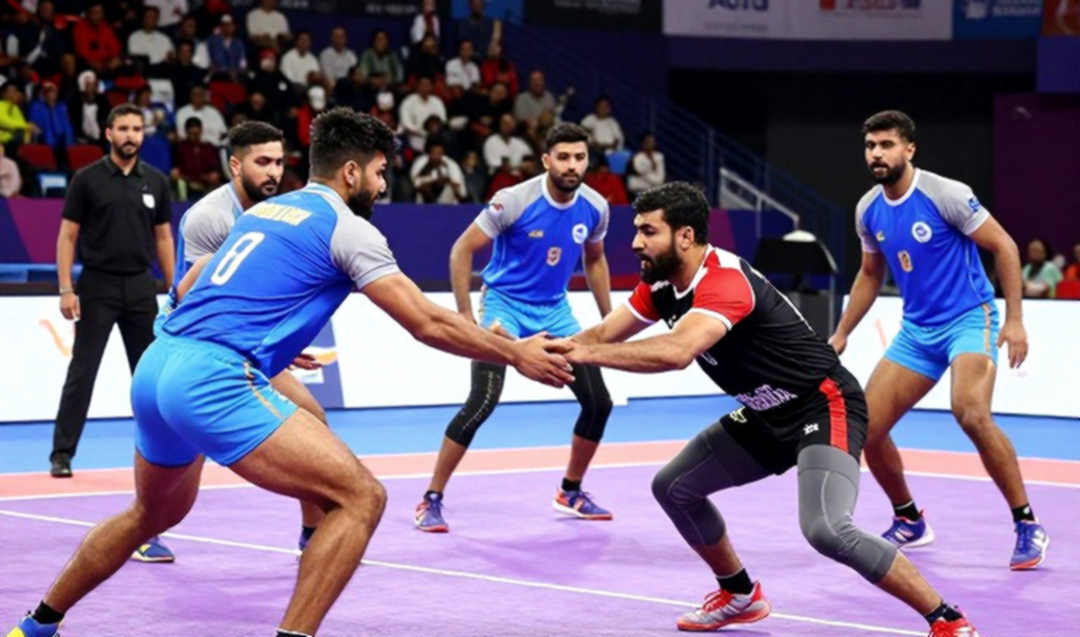
Since 2026, every honest kabaddi preview lists Iran as co-favourite. In Jakarta, India lost 23-24 to South Korea in the group and 18-27 to Iran in the semifinal. That defeat was manufactured by a selection culture, not by luck — a team picked on reputation, a raiding plan that had no answer to wrestling-based defence. Ahmedabad is now staging an event whose structure deletes that question entirely.
Here is the thing the organisers did not say. The tournament is called Commonwealth. Commonwealth membership rules exclude Iran and Pakistan — the two strongest and most emotionally charged rivals in the sport. The exclusion is a product of the membership club, not of the sport, and the effect is direct: there is no tier-1 opponent for India on the mat.
The Amateur Kabaddi Federation of India is organising and the International Kabaddi Federation has sanctioned it — the correct administrative chain for an international championship, no sleight of hand there. There is exactly one quoted official, IKF General Secretary Tejasvi Gehlot, and he states one intention: introduce the sport to a wider global audience. India's men are captained by Surjeet Singh with Naveen Kumar as vice-captain; the women by Nidhi Sharma with Ritu as deputy.
Pause on something. The report carries not one player statistic. No raid points, no tackle percentage, no club affiliation, no position. Only names and designations. When a tournament has a jersey-and-mascot press conference but no squad list, the communications priority was event branding, not the sport.
Sixty-two matches across nine days does its own talking. Thirteen nations, both genders, 400-plus players — roughly thirty per delegation, meaning squads of about twelve to fifteen each way. That volume against that calendar produces a showcase format, not a deep round-robin. It is a choice, not a flaw — but the consequence is that this championship is designed to build an inclusion case for multi-sport events, not to determine the world's best team.
The most solid thing in the entire structure is the women's draw. Twenty-three matches, its own captain and vice-captain — in a sport where the Pro Kabaddi League has run since 2026 and still has no women's league. The Indian women's team owns four Asian Games golds, a 2026 silver, and a 2026 world title in Dhaka at 35-28 over Chinese Taipei. The achievement already existed. The platform did not. Ahmedabad's 23-match draw is the first instalment of that platform, and it is the most honest gain this championship offers.
Commercially, the picture is blank. No named broadcaster, no sponsor, no prize purse, no ticketing data. An event that markets itself as a staircase to the Commonwealth Games should have led with an Indian broadcast partner. The absence of a broadcaster says one of two things: coverage is confined to a public or streaming channel, or commercial appetite is modest. Neither strengthens the global-reach claim.
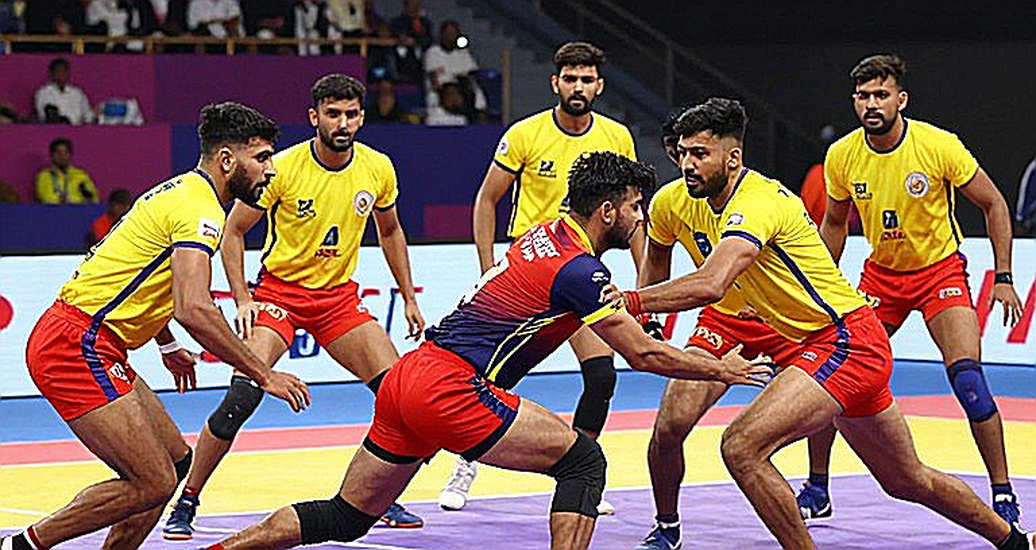
Sort the field into three tiers. Tier one: India. Tier two: Bangladesh, where kabaddi is the national sport, plus Sri Lanka, Kenya, Uganda, Tanzania. Tier three: Canada, England, Scotland, Australia, Singapore, Malaysia — diaspora-based squads. The list advertises global expansion well and supplies competitive depth not at all. East Africa is the exception: kabaddi there grew from the ground, not from an expatriate community.
One word on the host city. Gujarat is not a traditional kabaddi talent belt — Haryana, Maharashtra, Punjab, western Uttar Pradesh and Tamil Nadu are. Ahmedabad is a hosting decision tied to the 2030 Commonwealth Games, not a kabaddi-community decision. Kabaddi is the guest here, not the host — and the push for a place in the 2030 sports programme runs through this city.
Now the part where I have to doubt my own argument.
First: maybe breadth is the right strategy. For a sport whose only genuine rivalry is India-Iran, putting thirteen nations under one roof is not pointless. Canada, Scotland, Singapore and Malaysia are weak today — but before 2026 the Pro Kabaddi League wasn't on anyone's calendar either, and it is now the biggest economy in Indian sport. Institutions sometimes build breadth before depth.
Second: I drag the Jakarta wound into every argument, and that is my own bad habit. The 2026 lesson was that format manufactures results. Here the format works in India's favour, so the logic cuts the other way too. If format is that powerful, Iran's absence does not make an Indian title cheap; it merely makes it cheaply priced.
Third, and this is the firmest ground: if this championship leaves any permanent mark, it will come from the women's draw. If a 23-match stage generates demand for a women's pro league or a PKL exhibition, the tournament will have done more work than its global claims ever will.
The next checkpoint is plain. Watch the final weekend of October 30-31, 2026 — India's title is close to settled, so the question is not who wins. It is three questions: did any Commonwealth Games Federation representative appear on the stage, did an Indian broadcaster get named, and will there be a second edition or is this a one-off. Let me date the prediction: unless Iran is invited into an open-invitational category before 2029, this championship will never become a competitive benchmark — however many jerseys get unveiled.